| |
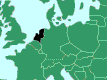
| Netherlands |
| |
|
|
| For
further information, related to Netherlands events, contact the Coordinator: |
| |
Prof.
Jo Hermans
Leiden University
Huygens Laboratory Faculty of Mathematics & Natural Sciences
P.O. Box 9504
2300 RA Leiden, Netherlands
Tel.: +31 71 527 5824 Fax: +31 71 527 5819
Email :[email protected] |
| |
| Useful
links: |
| http://www.wyp2005.nl
|
| |
|
Events |
| |
| Main
activities planned for the general public: |
- Science
on the Beach: Science is brought to the crowds of people holidaying
on the 100 km long Dutch beach in midsummer. A caravan of various
vehicles, manned with a dozen physics staff and students, travels
along the beach from north to south in two weeks. The train features
a hydrogen car and a solar car, among others. The central topic
is energy (as consumable good in daily life). Solar energy, wind
energy, tidal and wave energy can be demonstrated on the beach,
as well as the use of hydrogen as an energy carrier. Also, chemical,
biological and astronomical topics will be part of the education
and information programme. In addition to having its own educational
value, this activity also serves to draw the attention of the
public and the media to the main event (see below).
- Physics
in the Department Store: In every university city a physics
show with spectacular demonstrations will be organized in the
marketplace or in one or more large department stores. The public
will be treated to this 'info-tainment' during the first two weekends
in June. These shows will also promote the main physics event
- tentatively termed 'Discovery Festival' - which will take place
in Amsterdam during the second half of June 2005.
- 'Discovery
Festival' the main event: The main physics event, tentatively
termed 'Discovery Festival', will take place in the centre of
Amsterdam. Each of the 9 Dutch universities with a physics department
develops four super exhibits. At least two of these exhibits refer
to cutting-edge science and technology, while others demonstrate
interesting and thought-provoking physical phenomena. In addition,
industry will provide examples of modern technology, illustrating
the link between science and its application in everyday life.
In parallel, public lectures will be given by selected scientists
in an adjacent auditorium. The physics content will be accompanied
by issues from music, drama theatre, sculpture and other elements
which have a connection with creativity. The Event will last a
whole week in the second half of June 2005.
- Twelve
Physics posters : A physics poster will be launched every
month (analogous to the UK initiative in the WMY2k, see www.newton.cam.ac.uk/wmy2kposters/index.html)
and spread over the country. As posters are too small to contain
more than a 'teaser' (text and graphics), more information about
the topics brought up can be found on the supporting website.
The twelve subjects include Physics and Healthcare, Happiness
(biochemistry of the brain), Sex and Science, Communication, and
of course also the Big Bang, Einstein, the Structure of Matter.
The series of 12 topics also forms the basis for a PR campaign
via the media.
- HowStuffWorks
cards: We plan to produce a series of 52 'HowStuffWorks' cards,
each featuring an every-day-life object or phenomenon with a science
background. Examples include: How does a microwave oven work?
And the internet? A CD-player? Thunder? A rainbow? The idea is
to give a brief explanation on the card itself, and to refer the
reader to a popular science website (www.kennislink.nl)
for more information. The cards should become popular collectors
items among the young. This project is planned in cooperation
with the Belgian Physical Society.
- Various
activities throughout the year: In addition to the above,
a publicity campaign is planned during the whole year, to be deployed
in the press, on radio and TV, in order to reach the general public.
As an example, a series of popular science topics is planned in
the largest periodical in the Netherlands, i.e. the magazine of
the Tourist Association. The aim is to show the fun of science
in phenomena of everyday life, and to draw the attention to the
World Year of Physics events. For the young computer generation:
an Adventure Game will be launched in which Einstein and his achievements
will have a key role.
Activities
planned for High Schools
- Shows
and lectures : Schools will be offered the possibility to
be visited by one out of a variety of shows (such as the 'Fusion
Road Show' and a travelling physics circus) or, alternatively,
by a selected young university researcher giving a lecture on
a cutting-edge research topic.
- HISPARC:
The High School Project for Astrophysics Research on Cosmics involves
active participation of clusters of neighbouring high schools
in the detection of high-energy cosmic rays. Because of their
high energy, these rays generate secondary particles covering
an area on the order of a square kilometer. Using correlation
techniques, the detected antenna signals can be attributed to
a single cosmic ray. This project is already underway.
- National
School Teams Contest:
In analogy to the successful Freestyle Physics programme deployed
in Germany in recent years, high school kids will be invited to
build the best performing model of certain devices (within certain
constraints), such as a submarine which surfaces after one minute,
a hot air balloon, a water rocket etc. We expect to bring together
in this contest over one thousand pupils - teams from 300 schools
- accompanied by some 300 teachers. The activities in this project
are mainly intended to trigger curiosity, to show the fun of solving
scientific and technical problems, and to increase insight in
physics experiments. In parallel, laboratory visits and lectures
on selected topics will be organised for the participants.
|
|
|
| |
|